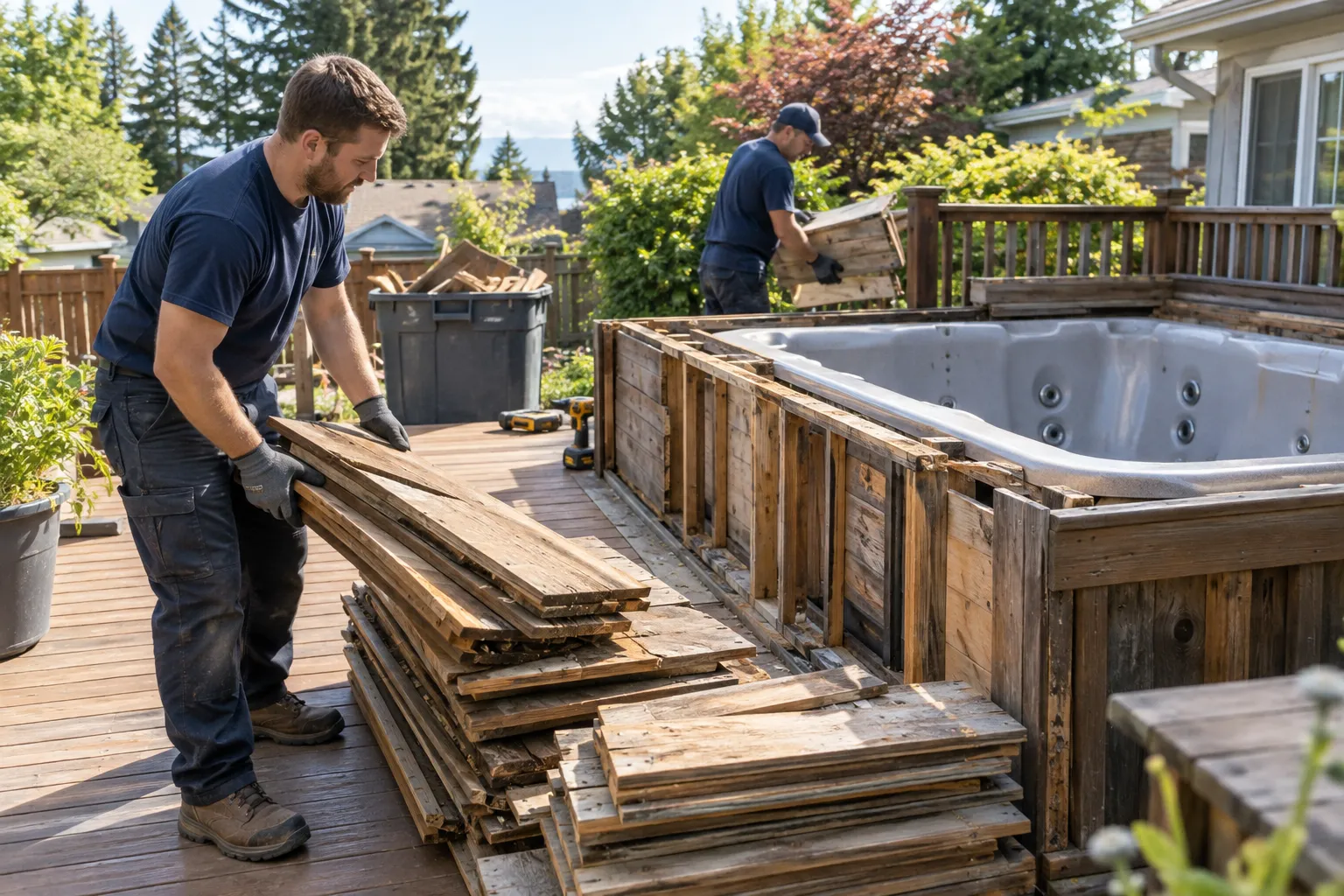
Cabinet panels, privacy screens, trim, benches, and deck boards can look like one assembly while serving different jobs. Photograph fasteners, framing, stairs, rails, and the underside where safely accessible.
Identify what is actually attached
Ask which materials are part of the hot tub and which belong to the deck. This keeps the removal scope clear and protects structural parts that are meant to stay.
Set a clean boundary
Mark the approved cut or removal line before work starts. Define whether loose boards, railing sections, steps, and fasteners are included. State who will make the area safe if the removal leaves an opening or exposed edge.
Buncombe County identifies construction and demolition waste as a separate disposal stream. The material mix and volume should be discussed before loading.
Plan for the next contractor
If a carpenter, electrician, or landscaper will follow, ask what condition they need. Photos after removal and a swept work area can make the handoff clearer, but haul-away should not be described as deck repair or site restoration.
Job-planning checklist
- Structural and decorative parts identified
- Removal boundary marked
- Open-edge plan confirmed
- Debris types listed
- Next contractor’s needs recorded
Use the checklist on the service page
Review the companion hot tub deck & surround removal page, then call with the details that apply to your property. Do not start utility or structural work beyond your competence.
Sources and scope
Guidance was checked on October 1, 2026 against the client’s published service information, manufacturer draining guidance, and current Buncombe County solid-waste information. Facility rules and manufacturer instructions can change; confirm the current rule for your address and equipment.