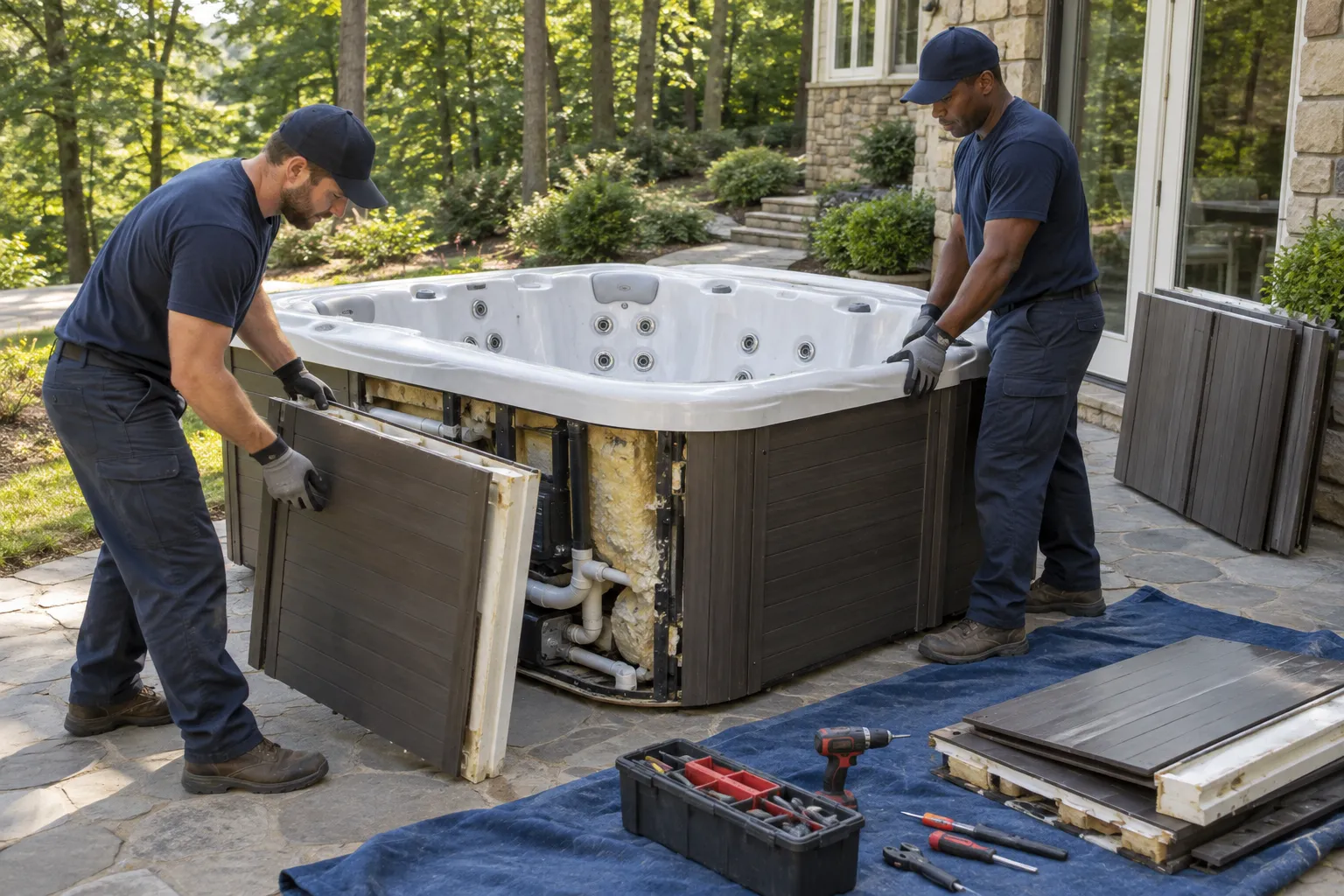
Have the electrical supply isolated and disconnected by an appropriate qualified professional before removal work begins. The tub should be cool, empty, and dry enough to handle without standing water in the footwell or plumbing. Follow the manufacturer’s instructions for your model when draining; site drainage rules and ground conditions can differ.
Start with power and water
Do not cut into the cabinet or shell while a hardwired electrical connection, gas line, or unfamiliar control equipment remains attached. If the connection is uncertain, stop and identify it first.
Measure the complete exit route
Measure the tub at its widest point, then record gate openings, side-yard width, deck stairs, railings, corners, and overhead obstructions. A tub that cannot leave intact may need to be dismantled in place.
Photograph the tub from all four sides and take one continuous set of photos along the exit route. Include the spot where a truck or trailer can park.
Clear the work zone
Move furniture, planters, hoses, toys, and fragile decorations away from the tub and carry path. Keep pets and children indoors while the work is underway. Leave permanent railings and structural deck parts in place unless their removal is part of the approved scope.
Job-planning checklist
- Power safely isolated
- Tub drained and cool
- Four-side photos taken
- Gate and route measured
- Parking and stairs disclosed
Use the checklist on the service page
Review the companion freestanding hot tub removal page, then call with the details that apply to your property. Do not start utility or structural work beyond your competence.
Sources and scope
Guidance was checked on October 1, 2026 against the client’s published service information, manufacturer draining guidance, and current Buncombe County solid-waste information. Facility rules and manufacturer instructions can change; confirm the current rule for your address and equipment.